Imarisha Maisha
Building safer, stronger and more resilient communities
Imarisha Maisha, implemented by Action for Children in Conflict, is an integrated community resilience project working to reduce Female Genital Mutilation (FGM), child marriage, and gender-based violence (GBV), while strengthening the social, economic, and climate resilience of vulnerable communities.
The project works with communities to challenge harmful social norms, strengthen protection systems, expand economic opportunities for women, and promote climate-resilient solutions. Through these interconnected approaches, Imarisha Maisha seeks to create safer environments for girls and women, strengthen household resilience, and support communities to build a more secure and sustainable future.
KEY THEMATIC AREAS
Positive social and norms change
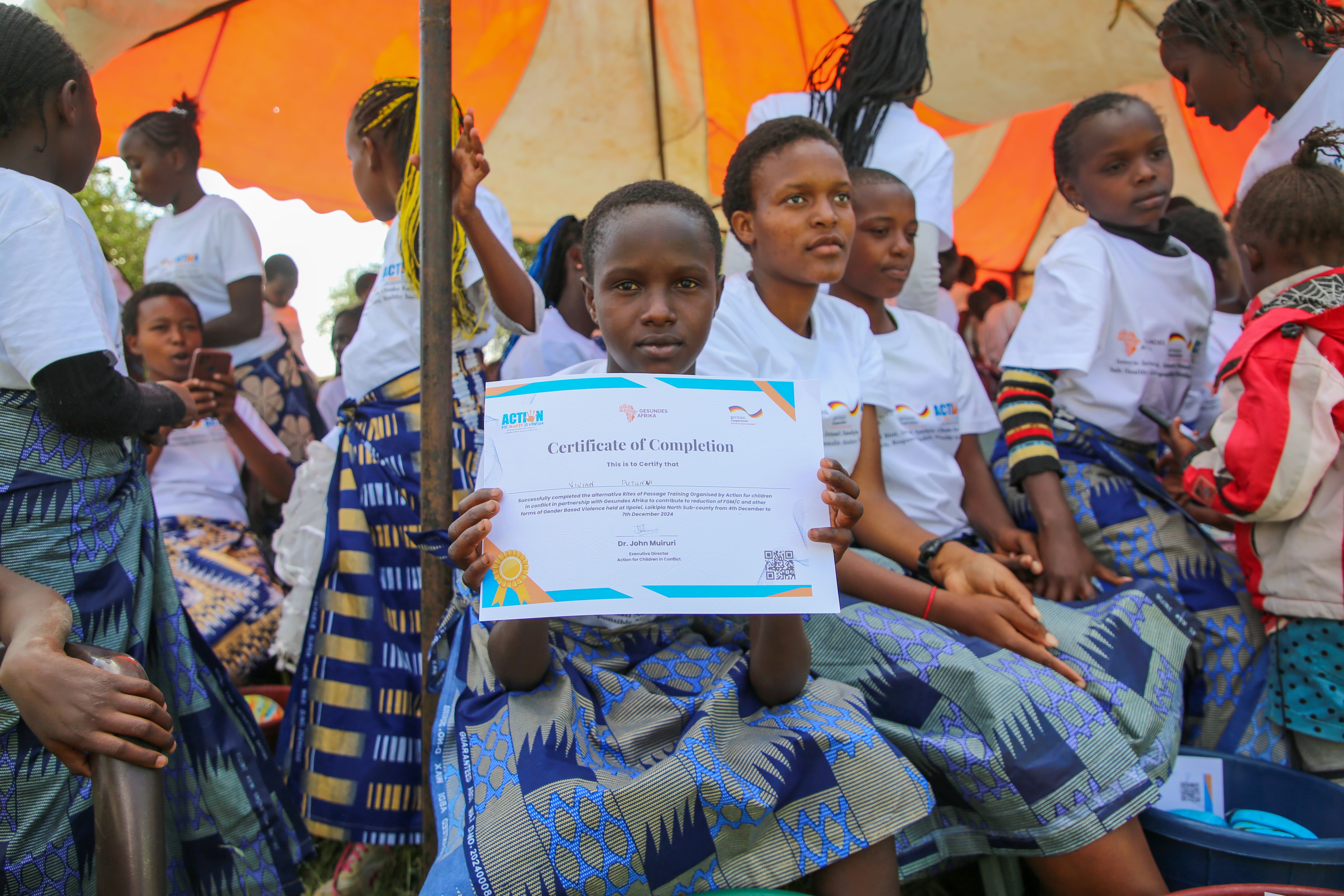
The project promotes positive social and cultural norms by engaging girls, women, Morans, elders, and religious leaders in dialogues and community activities. It supports Alternative Rites of Passage (ARP) as an alternative to FGM and child marriage, while empowering girls with rights awareness, life skills, and education support. The project will conduct 10 ARP ceremonies and 12 structured dialogue workshops to strengthen community commitment to protecting girls.
Beneficiaries:
- 1,500 adolescent girls (aged 9–17)
- 250 Morans (young men)
- 200 community elders and religious leaders
- 200 women
- 200 girls participating in dialogue sessions
Protection and access to services
The project strengthens child protection systems by improving safeguarding in schools, establishing a toll-free GBV and child protection hotline, and developing referral pathways between schools, police, health facilities, and child protection authorities. It also trains police officers in survivor-centred responses to FGM, child marriage, and gender-based violence, helping communities access protection and support services.
Beneficiaries:
- 1,500 adolescent girls
- 100 teachers and school health club patrons
- 100 police officers
- 30 partner schools
- Approximately 35,000 indirect community member
Women’s economic empowerment
The project strengthens women’s economic independence through training in business management, cooperative governance, entrepreneurship, and value addition. Women will receive support to improve their Village Savings and Loan Associations (VSLAs), access market linkages, and use shared productive assets such as beadwork equipment, grain mills, and beekeeping equipment. These interventions aim to strengthen women’s income, decision-making capacity, and resilience to economic pressures that contribute to harmful practices.
Beneficiaries:
- 750 women
- 7 women’s cooperatives and associated VSLAs
Climate resilience
The project promotes climate resilience through school-based rainwater harvesting, tree nurseries, and training in climate-smart agriculture. Fifteen schools will receive rainwater harvesting systems and tree nurseries, while students learn drought-resilient farming methods and tree management. These interventions aim to improve access to water, support alternative sources of food and income, and reduce the economic pressures that can increase girls’ vulnerability to early marriage and other harmful practices.
Beneficiaries:
- 15 schools
- Students, School Safety Committees, and Green Champions involved in the activities
- Wider households and communities benefiting from climate-smart practices
TARGET BENEFICIARY
The project will directly reach approximately 2,900 individuals and indirectly benefit up to 35,000 community members across Laikipia North, with an overall target reach of 37,900 people.
More images
A photo slider with captions for related images.
No extra images added yet.